Dream Backer Font Review for Branding Projects
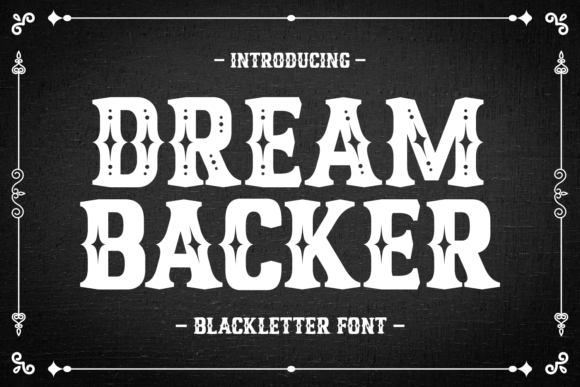
Opening a fresh brand board one morning, I was looking for something bold and memorable to anchor a new identity for a local bakery. That’s when I stumbled upon Dream Backer, a blackletter font with a twist—those small rhomb-shaped details really caught my eye. It wasn’t just another medieval-style typeface; it had character, a sense of craftsmanship, and a modern edge that made me pause.
A Bold Statement in Blackletter Design
Dream Backer is a striking blackletter font that brings the traditional medieval style into the 21st century. The unique rhomb-shaped accents along the stems and serifs give it a distinctive personality that sets it apart from other fonts in the same category. It’s not just about the weight or the structure—it’s the little details that make this font feel handcrafted and intentional.
The overall mood of Dream Backer is dramatic and commanding. It feels like it could be used on a heraldic crest or an old-world signboard, but it also has enough versatility to work in contemporary branding. Its boldness makes it ideal for headlines, logos, and any design where you want to create impact at first glance.
Testing Dream Backer in Real-World Scenarios
I tested Dream Backer across several branding elements: a logo draft for a boutique coffee shop, a packaging mockup for a handmade soap line, and a social media layout for a vintage-inspired clothing brand. Each time, the font stood out as a strong visual anchor without overwhelming the design.
On the logo concept, Dream Backer gave the coffee shop a sense of tradition and quality, while still feeling fresh. The rhomb shapes added texture without being distracting. For the soap label, the font helped convey a natural, artisanal feel. And on Instagram posts, it worked well as a headline, drawing attention without losing readability.
However, it's worth noting that Dream Backer isn’t suited for long paragraphs of body text. The complexity of the letterforms can reduce legibility in smaller sizes or extended passages. This makes it best used as a display font or for short phrases where visual impact is more important than readability.
Font Pairing and Practical Considerations
When pairing Dream Backer with other typefaces, I found that a clean sans serif font worked best for body text. A simple, modern sans serif like Montserrat or Lato balanced the ornate style of Dream Backer, keeping the overall design cohesive. For a more elegant look, a classic serif font such as Georgia or Caslon could complement the medieval inspiration behind Dream Backer.
It’s also important to consider the licensing terms before using Dream Backer in client work. If you’re designing for a brand identity, packaging, or website, ensure that the font license allows for commercial use across all intended platforms. Many premium fonts require specific licenses for web use, print-on-demand products, or digital assets.
Where Dream Backer Shines
Dream Backer excels in projects that benefit from a strong visual identity. Think of it as a go-to font for logos, brand headers, product packaging, and social media graphics. It adds a touch of elegance and uniqueness that can help a brand stand out in a crowded market.
For instance, if you're working on a creative studio identity, Dream Backer can serve as a powerful statement in your header or tagline. It works well on printed business cards too, giving them a tactile, handcrafted feel. Just remember to keep the rest of the design elements clean so the font doesn’t get lost in the details.
On the flip side, avoid using Dream Backer in formal corporate environments or for websites that rely heavily on long-form content. Its intricate design may not be the best fit for those contexts, even though it’s a premium font with great appeal in the right scenarios.
Final Tips for Using Dream Backer
If you're considering Dream Backer for your next project, start by testing it in low-stakes environments. Try it on a sample logo, a mockup, or a social media post to see how it performs in different contexts. Pay attention to how it looks at various sizes and in different colors—this will help you understand its strengths and limitations.
Also, check the file formats included with the font. If you need webfont support or multilingual characters, make sure they’re available. A well-rounded font package can save you time and headaches later on, especially when scaling your design across multiple platforms.
In summary, Dream Backer is a versatile and visually compelling blackletter font that can elevate your branding efforts. Whether you're designing for a boutique, a café, or a creative studio, this font offers a unique way to express your brand’s personality through typography.